 Stoutmark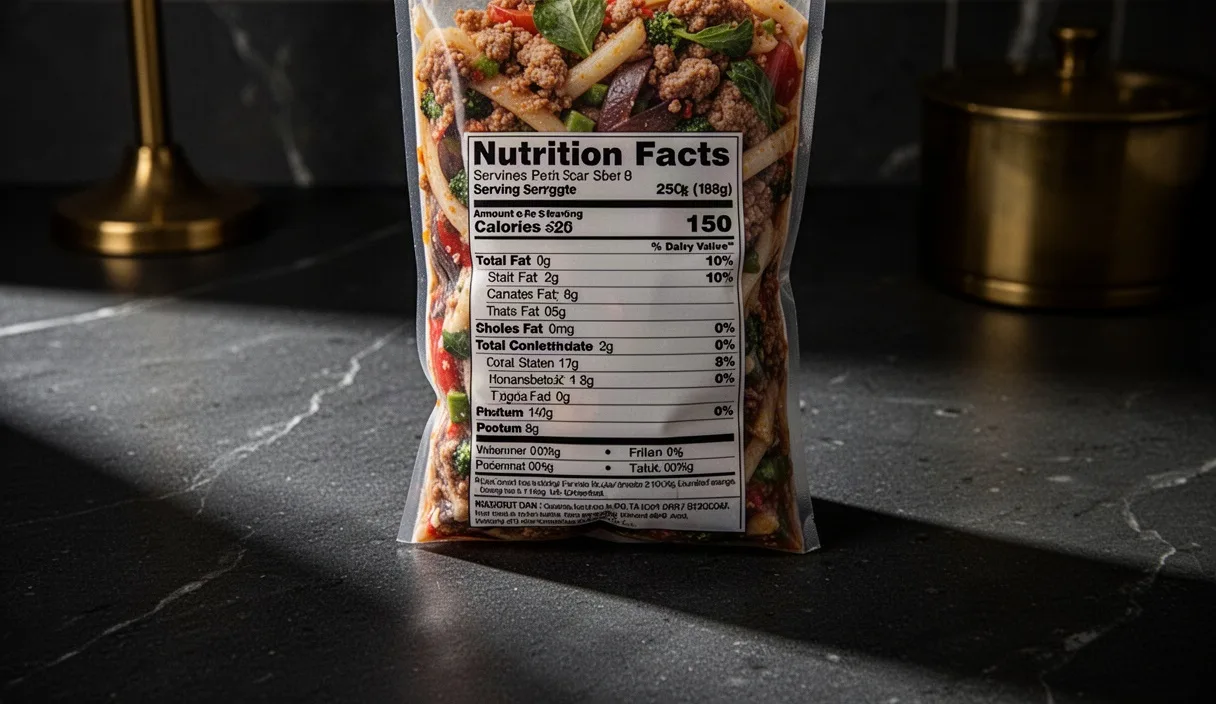

Nutrition labels are printed in the same format on almost every packaged food, yet most people scan them in the wrong order and walk away more confused than when they started. The numbers are not hard to understand once you know what each section is actually measuring and how the sections relate to each other. This guide breaks the label down piece by piece, in the order that actually matters for making a decision in the grocery aisle.
None of this requires memorizing formulas or tracking every gram you eat. It requires knowing which three or four numbers on the label change the picture and which ones are mostly noise for the average shopper. Once you have that sorted, reading a label takes about ten seconds.
Why serving size is the first thing to check
Every number on a nutrition label, calories, fat, sugar, sodium, is calculated for the serving size listed at the top, not for the whole package. Skip this line and every other number on the label is meaningless to you. A bag of chips might list 150 calories, but if the serving size is 12 chips and the bag holds 3 servings, eating the whole bag means 450 calories, not 150.
Manufacturers are not hiding anything illegal here, serving sizes are regulated and standardized across similar products, but they are not designed to match how much a person actually eats in one sitting. A can of soda often lists "8 fl oz" as a serving even though the can holds 12 fl oz. A pint of ice cream may show 4 servings, meaning the "500 calorie" ice cream you assumed you were eating is actually 2,000 calories if you finish the pint.
Since 2020, U.S. labels have shown serving sizes in larger, bolder type specifically to fix this confusion, and many now include a second column showing values "per package" for items that are commonly eaten in one sitting, like a 20 oz soda bottle. Look for that second column first if it exists, it removes the need to do math.
Quick check: before reading any other number, ask "how many servings am I actually about to eat?" and multiply from there.
Reading calories in context of your goals
Calories tell you how much energy a food provides, but that number only means something once you compare it to what you're trying to do. Someone trying to lose weight, someone trying to gain muscle, and someone maintaining their current weight will all read the same 300-calorie number differently.
A rough reference point: a typical adult diet is often built around a 2,000-calorie day for label comparison purposes, which is why you'll see "%DV based on a 2,000 calorie diet" printed at the bottom of most labels. Your own needs might be higher or lower depending on age, activity level, height, and goals, a registered dietitian or your doctor can help calculate a number specific to you if you want precision.
What matters more than the raw calorie count is calorie density relative to the food's volume and nutritional content. Two products can both have 200 calories per serving, but one delivers 200 calories in a cup of vegetables and lean protein, the other delivers 200 calories in three cookies with almost no protein or fiber. The calorie count alone doesn't tell you which one will keep you fuller longer.
- If your goal is weight loss: compare calories per serving relative to protein and fiber content, foods higher in both tend to be more filling per calorie.
- If your goal is muscle gain: calories matter, but pair the number with the protein grams listed further down the label.
- If you're just trying to maintain: consistency across a week matters more than any single label's number.
Understanding percent daily value
The %DV column is the most underused part of the label because most people don't know it's a comparison tool, not a hard limit. It tells you what percentage of a recommended daily amount one serving provides, based on that standard 2,000-calorie reference diet.
The MHRA and the FSA's general rule of thumb: 5% DV or less per serving is considered low for that nutrient, 20% DV or more is considered high. This applies to any nutrient on the label, sodium, saturated fat, fiber, calcium, and lets you compare two products quickly without doing any math.
| %DV Shown | What It Means | Example |
|---|---|---|
| 5% or less | Low amount of that nutrient | 3% DV sodium, a genuinely low-sodium choice |
| 10-15% | Moderate amount | 12% DV fiber, a reasonable contribution |
| 20% or more | High amount | 25% DV saturated fat, worth noting if you're watching intake |
For nutrients you want more of, fiber, potassium, calcium, vitamin D, iron, aim for the higher %DV. For nutrients most people are advised to limit, added sugar, sodium, saturated fat, the lower %DV is generally the better pick. If you have a specific medical condition like cardiovascular wellness or metabolic balance, ask your doctor or a dietitian what specific daily targets apply to you, the 2,000-calorie reference is a general population average, not a personal prescription.
What to look for in the carbohydrate breakdown
The carbohydrate section on a label is broken into three parts: total carbohydrate, dietary fiber, and total sugars, with "added sugars" listed separately underneath total sugars since the 2016 label redesign. Each line answers a different question.
Total carbohydrate includes everything, starches, natural sugars, and fiber, combined into one number. Dietary fiber is subtracted from digestible carbs in terms of how your body processes them, which is why some people track "net carbs" (total carbs minus fiber) informally, though this isn't an officially regulated label term.
The added sugars line is the one most worth your attention. It separates sugar that occurs naturally in a food, like the sugar in plain milk or fruit, from sugar added during processing, like high fructose corn syrup or cane sugar added to flavored yogurt. A container of plain Greek yogurt might show 6g total sugars and 0g added sugars, while a flavored version of the same brand can show 19g total sugars with 13g of that listed as added.
- Total carbohydrate: overall number, useful for people counting carbs for medical or performance reasons.
- Dietary fiber: higher is generally better, look for at least 3g per serving in packaged foods as a reasonable benchmark.
- Added sugars: the American Heart Association has suggested limits around 25g per day for women and 36g for men, though individual needs vary and a doctor's guidance takes priority over any general suggestion.
Sodium and fat: what the numbers mean
Sodium is listed in milligrams, not grams, which throws people off when comparing it to other nutrients on the label. A product listing "480mg sodium" at 20% DV is hitting a meaningful chunk of a commonly cited 2,300mg daily reference amount in a single serving, something worth noticing if you're eating multiple servings or multiple sodium-containing foods that day.
Fat on the label is split into total fat, saturated fat, and trans fat, with unsaturated fats not always broken out separately. Saturated fat is the one most public health guidance asks people to moderate, current U.S. dietary guidelines have suggested keeping saturated fat under about 10% of total daily calories, though again, personal targets should come from a professional if you have a specific health condition like heart disease.
Trans fat deserves a specific note: labels are required to show "0g" if a product contains less than 0.5g per serving, even if it technically contains a small trace amount. Checking the ingredient list for "partially hydrogenated oil" is the more reliable way to confirm a product is genuinely free of trans fat, since the rounding rule on the number itself can be misleading in rare cases.
Cholesterol is also listed under the fat section on most labels, measured in milligrams, and is more relevant to people managing cardiovascular risk factors under a doctor's care than to general shoppers without a specific concern.
Common mistakes
- Reading the calorie number without checking servings per container first, leading to underestimating how much you're actually consuming.
- Assuming "0g sugar" or "0g trans fat" means completely zero, when rounding rules allow small trace amounts under the labeled threshold.
- Ignoring the ingredient list entirely and relying only on the nutrition panel, the ingredient list shows what's actually in the product and in what order by weight, which the nutrition panel alone doesn't reveal.
- Treating %DV as a strict daily cap rather than a comparison tool based on a general 2,000-calorie reference that may not match your own needs.
- Comparing two products without checking that their serving sizes match, a "healthier" cereal with a smaller serving size can look better on paper while delivering the same calories per bowl.
Next steps for reading labels with confidence
Start by picking two or three products you buy regularly and actually read the full label on each one, including the ingredient list. Compare serving sizes side by side first, then move to the %DV column for sodium, saturated fat, and fiber, since those three numbers give you the fastest read on whether a product leans toward your goals or away from them.
Build the habit gradually rather than trying to analyze every purchase in depth. After a week or two of checking serving size and %DV on the foods you buy most often, the process becomes automatic and takes only a few seconds per product.
If you're managing a specific health condition, tracking macros for an athletic goal, or following a diet plan prescribed for medical reasons, work with a registered dietitian or your physician to set numeric targets that fit your actual situation. The label gives you accurate information, but turning that information into a personal plan is a decision worth making with professional input rather than general guidance alone.